

Use up and down arrow keys to resize the meta box pane.
Half point PPR rankings are fantasy football player rankings for leagues where each reception is worth 0.5 points. This format sits between standard scoring and full PPR scoring.
For example, a player who catches six passes receives 3 extra fantasy points from those receptions alone. Because of this scoring system, players who catch passes regularly gain value, but running backs who score touchdowns and produce strong rushing numbers still remain extremely important.
Quick Scoring Example
| Action | Standard | Half PPR | Full PPR |
|---|---|---|---|
| Reception | 0 points | 0.5 points | 1 point |
| 6 receptions | 0 points | 3 points | 6 points |
| Rushing/Receiving Yards | Usually same | Usually same | Usually same |
| Touchdowns | Usually same | Usually same | Usually same |
The biggest difference is player value. A high-volume receiver may rise in full PPR, while a touchdown-heavy running back can become relatively more valuable in standard or half PPR formats.
2026 Half Point PPR Rankings
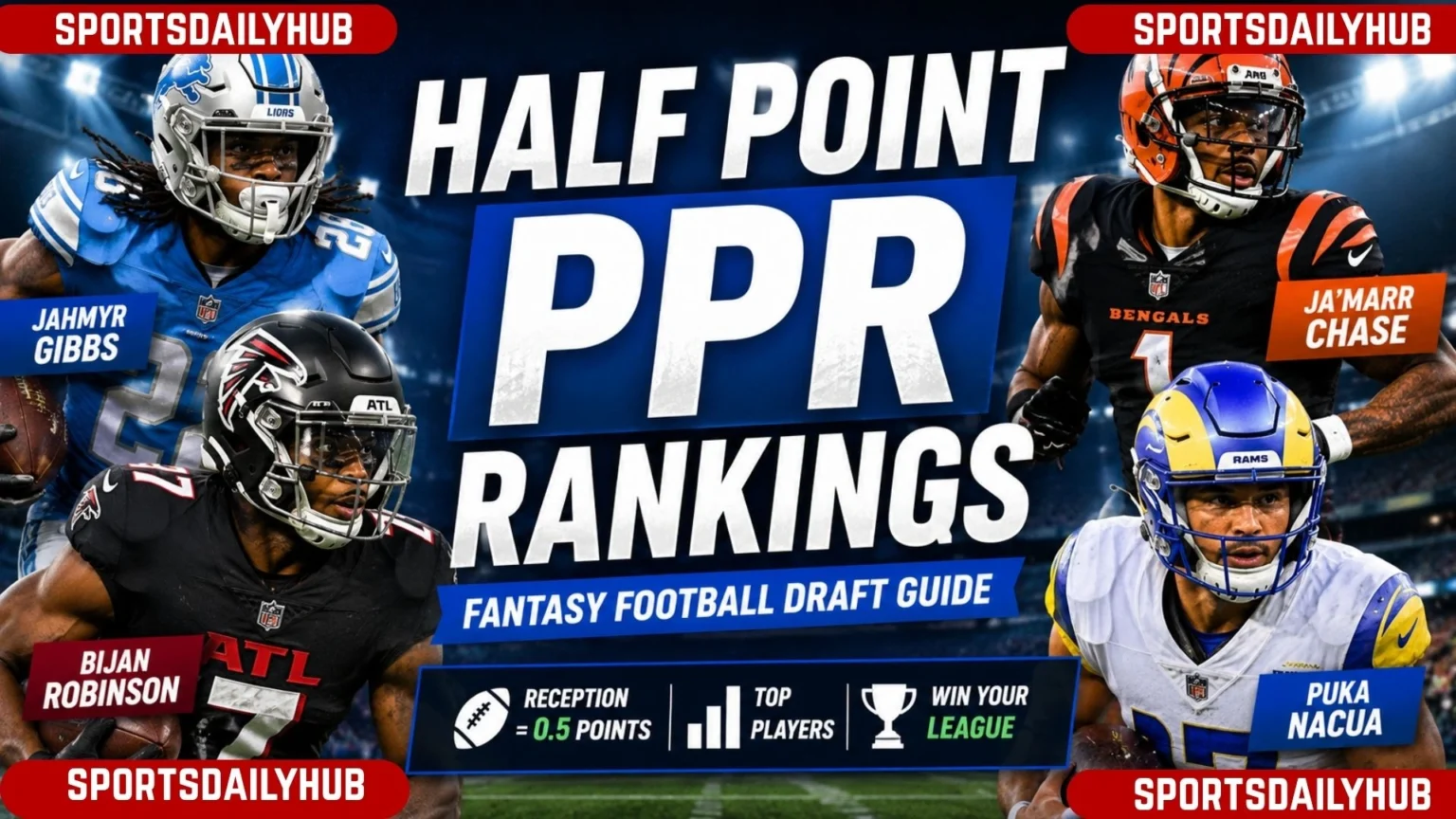
Current rankings can change quickly because of injuries, depth-chart moves, trades, and preseason news. As of the latest available 2026 consensus rankings, the top overall half-PPR players include Jahmyr Gibbs, Bijan Robinson, Ja’Marr Chase, Puka Nacua, Jaxon Smith-Njigba, and Amon-Ra St. Brown.
| Rank | Player | Position | Team |
|---|---|---|---|
| 1 | Jahmyr Gibbs | RB | Detroit Lions |
| 2 | Bijan Robinson | RB | Atlanta Falcons |
| 3 | Ja’Marr Chase | WR | Cincinnati Bengals |
| 4 | Puka Nacua | WR | Los Angeles Rams |
| 5 | Jaxon Smith-Njigba | WR | Seattle Seahawks |
| 6 | Amon-Ra St. Brown | WR | Detroit Lions |
| 7 | Jonathan Taylor | RB | Indianapolis Colts |
| 8 | Christian McCaffrey | RB | San Francisco 49ers |
| 9 | CeeDee Lamb | WR | Dallas Cowboys |
| 10 | Justin Jefferson | WR | Minnesota Vikings |
These rankings are useful as a starting point, but your league settings can change player values. The number of starting players, flex spots, roster size, and whether quarterbacks receive special scoring can all affect your draft strategy.
Why Half Point PPR Rankings Are Different
Half PPR creates a balance between two important types of fantasy players. Players who catch many passes receive extra value, but receptions do not dominate scoring as much as they do in full PPR.
A running back who catches 60 passes gains 30 extra points in half PPR. That is significant, but it is still only half of the 60-point bonus the same player would receive in a full-PPR league.
This format often rewards complete players. Running backs who can run and catch passes become highly valuable. Wide receivers with strong target volume remain important, while touchdown production can also move a player up the rankings.
Half PPR Rankings by Position
Quarterbacks
In a standard one-quarterback league, you usually do not need to draft a quarterback in the opening rounds. Current half-PPR rankings place Josh Allen, Lamar Jackson, Drake Maye, Joe Burrow, and Jayden Daniels among the leading quarterback options.
Quarterbacks who can run often have an advantage because rushing yards and rushing touchdowns provide another path to fantasy points.
Running Backs
Running back remains one of the most important positions in half PPR. Jahmyr Gibbs, Bijan Robinson, Jonathan Taylor, Christian McCaffrey, and James Cook III currently lead the position in one major 2026 half-PPR cheat sheet.
Pass-catching backs receive a useful boost, but you should still pay close attention to workload, goal-line opportunities, offensive line quality, and touchdown potential.
Wide Receivers
Wide receivers remain extremely valuable because modern NFL offenses create more passing opportunities. Current half-PPR positional rankings place Ja’Marr Chase, Puka Nacua, Jaxon Smith-Njigba, Amon-Ra St. Brown, and CeeDee Lamb at the top of the position.
A receiver does not need 100 catches to become an elite half-PPR option. Big plays, touchdowns, and consistent targets can create excellent value.
Tight Ends
Tight end can create a major advantage when you find a player who consistently produces. Current 2026 half-PPR rankings list Brock Bowers and Trey McBride among the top options.
The position becomes thinner after the top tier, so understanding the gap between elite players and the remaining options can help you decide when to draft one.
How to Use Half Point PPR Rankings on Draft Day
Do not simply select players in exact ranking order. Rankings provide a guide, but successful drafting also depends on value.
If several players have similar rankings, choose based on your team needs, upside, role, and risk. A tier-based strategy can also help you avoid panic when another manager selects your preferred player.
Pay attention to these factors:
- Targets and receptions
- Expected workload
- Touchdown opportunities
- Team offense
- Injury history
- Depth-chart competition
- Average draft position
Fantasy rankings also change throughout the preseason. Major news can quickly affect a player’s expected role, which is why updated rankings are more useful than a static list created months earlier. Draft Sharks, for example, states that its 2026 half-PPR rankings are updated based on player news, trades, coaching changes, and depth-chart developments.
Best Half Point PPR Draft Strategy
A balanced approach usually works well in half PPR. Elite running backs and wide receivers both carry major value, so you do not need to force one position with every early pick.
In a typical one-quarterback league, consider building your starting running back and wide receiver foundation first. You can then look for value at quarterback and tight end, depending on how the draft develops.
The most important rule is simple: draft value instead of chasing one fixed strategy. If an elite player falls below their expected range, that opportunity may be more important than following a strict position plan.
Frequently Asked Questions
What does half point PPR mean?
Half point PPR means a player earns 0.5 fantasy points for every reception.
Are running backs better in half PPR?
Strong running backs often gain relative value compared with full PPR, especially those who score touchdowns and receive large workloads.
Who is ranked No. 1 in 2026 half PPR?
Current rankings vary by provider and update frequently. Recent consensus sources have Jahmyr Gibbs at or near the top overall.
Should I draft a quarterback early?
Usually, no. In a standard one-quarterback league, many managers can find strong quarterback value after the early rounds.
Do half point PPR rankings change?
Yes. Injuries, trades, preseason performance, and depth-chart changes can quickly change fantasy football rankings.
Final Thoughts
Half point PPR rankings offer a balanced way to value fantasy football players. Receptions matter, but rushing production, touchdowns, yardage, and overall opportunity remain equally important.
Use the rankings as your draft foundation, but stay flexible. The best fantasy managers adjust when values change and do not blindly follow a single list. With the 2026 season approaching, current consensus rankings favor elite players such as Jahmyr Gibbs, Bijan Robinson, Ja’Marr Chase, and Puka Nacua, while positional depth can create opportunities later in the draft.
Read more : TPC Southwind: Course Guide, History, Layout and Tournament Legacy