

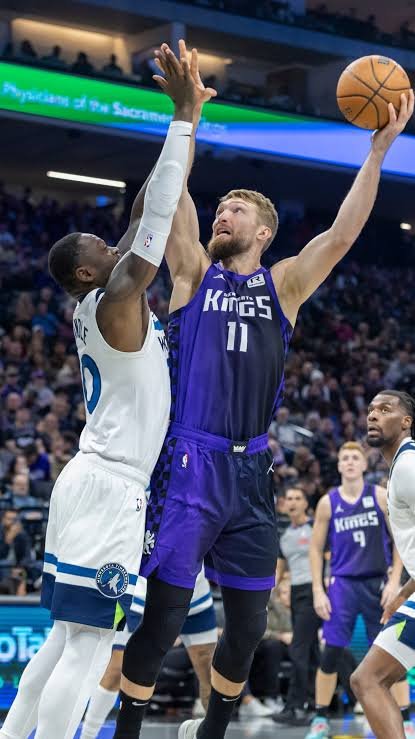
- Sacramento Kings vs Timberwolves Match Player Stats: Game Overview
- Minnesota Timberwolves Player Stats
- Sacramento Kings Player Stats
- Kings vs Timberwolves Player Stats Comparison
- What the Player Stats Tell Us About the Game
- Frequently Asked Questions
- Final Takeaways
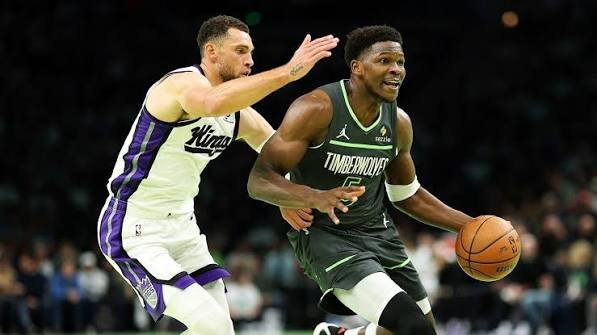
The Sacramento Kings vs Timberwolves match player stats from November 9, 2025, show how Minnesota turned a competitive opening quarter into a comfortable 144–117 victory. The game was played at Golden 1 Center in Sacramento, where the Timberwolves controlled most of the middle part of the game and finished with a 27-point advantage. Minnesota scored 31 points in the first quarter, 40 in the second, 40 in the third, and 33 in the fourth. Sacramento answered with 25, 29, 30, and 33 points respectively.
What makes this Kings vs Timberwolves player stats matchup interesting is that Sacramento actually had three players score at least 20 points. Zach LaVine finished with 26, DeMar DeRozan scored 22, and Domantas Sabonis added 20 points along with 13 rebounds. Minnesota, however, received strong production from several players at the same time, led by Anthony Edwards with 26 points. Jaden McDaniels added 21, while Rudy Gobert and Julius Randle each scored 19.
Quick Information: Kings vs Timberwolves Match
| Statistic | Minnesota Timberwolves | Sacramento Kings |
|---|---|---|
| Final Score | 144 | 117 |
| 1st Quarter | 31 | 25 |
| 2nd Quarter | 40 | 29 |
| 3rd Quarter | 40 | 30 |
| 4th Quarter | 33 | 33 |
| Field Goal % | 53.6% | 44.4% |
| 3-Point % | 39.1% | 44.8% |
| Rebounds | 51 | 53 |
| Turnovers | 10 | 16 |
The team numbers tell an important story. Sacramento actually collected 53 rebounds compared with Minnesota’s 51 and shot better from three-point range, 44.8% to 39.1%. Yet the Timberwolves were much more effective overall from the field, making 53.6% of their shots compared with Sacramento’s 44.4%, while also committing six fewer turnovers. Those differences helped Minnesota create extra scoring opportunities and maintain control of the game.
The biggest turning point came after the first quarter. Sacramento was only six points behind at 31–25, but Minnesota exploded for 40 points in each of the next two quarters. By the start of the fourth quarter, the Timberwolves had built a large enough advantage that Sacramento could not realistically recover. The fourth quarter ended 33–33, meaning the Kings did not lose additional ground late; the damage had already been done during the second and third quarters.
Key Numbers From the Sacramento Kings vs Timberwolves Match
A few numbers stand out when looking at the Sacramento Kings vs Timberwolves match player stats:
- 144 points: Minnesota’s final scoring total.
- 26 points: Anthony Edwards’ team-high score.
- 26 points: Zach LaVine’s team-high for Sacramento.
- 12 rebounds and 5 blocks: Rudy Gobert’s defensive contribution.
- 20 points and 13 rebounds: Domantas Sabonis’ double-double.
- 16 turnovers: Sacramento’s total compared with Minnesota’s 10.
- 53.6% field shooting: Minnesota’s overall field-goal percentage.
One of the clearest lessons from this game is that individual scoring alone does not determine the winner. LaVine matched Edwards’ 26 points, and Sabonis produced a double-double, but Minnesota had more consistent contributions throughout its lineup. The Timberwolves also combined efficient shooting with strong interior play and better ball security, which made their offensive attack much harder for Sacramento to contain.Minnesota Timberwolves Player Stats
The Minnesota Timberwolves player stats show a balanced offensive performance rather than a game carried by only one player. Anthony Edwards led Minnesota with 26 points, while Jaden McDaniels added 21. Julius Randle and Rudy Gobert each scored 19, and Gobert also collected 12 rebounds. Naz Reid added 13 points from the bench, while Jaylen Clark and Rob Dillingham each contributed 11 points.
This balance was one of the biggest reasons Minnesota pulled away from Sacramento. Edwards did not need to score 40 or 50 points because several teammates were producing at the same time. Interesting fact: Minnesota scored 144 points while making 52 of 97 field-goal attempts, a 53.6% shooting rate, and made 18 three-pointers. That combination of volume and efficiency made it difficult for Sacramento to stay within striking distance.
Anthony Edwards Player Stats
Anthony Edwards finished with 26 points, 4 rebounds, 5 assists and 2 steals. His contribution went beyond his scoring because he also helped Minnesota move the ball and create opportunities for teammates. The five assists were especially useful in a game where several Timberwolves players finished with strong scoring numbers.
Edwards also became important during Minnesota’s second-quarter run. After Sacramento briefly reduced the deficit, Edwards responded with a three-pointer and a four-point play as Minnesota went on an 11–0 run. That stretch helped turn a close game into a much more comfortable Timberwolves advantage.
Jaden McDaniels Player Stats
Jaden McDaniels scored 21 points and was another important piece of Minnesota’s attack. His scoring gave the Timberwolves a second perimeter threat alongside Edwards, which prevented Sacramento from putting all of its defensive attention on Minnesota’s star guard.
McDaniels was also involved in the game’s biggest scoring surge. His three-pointer in the third quarter pushed Minnesota’s advantage to 85–63, and the Timberwolves continued building from there. By the end of the third quarter, Minnesota had scored 40 points in the period and led 111–84.
Rudy Gobert Player Stats
Rudy Gobert recorded 19 points and 12 rebounds, giving Minnesota another double-double. His value was particularly noticeable around the basket, where his size affected Sacramento’s ability to attack inside. Gobert also started the game strongly on defense, recording three blocks in the first quarter according to the game recap.
Gobert’s performance is a good example of why box-score analysis should include more than points. A center can influence a game through rebounds, blocks, defensive positioning and second-chance opportunities. In this matchup, Gobert combined interior defense with efficient scoring and helped Minnesota control the physical side of the game.
Julius Randle and Other Timberwolves Player Stats
Julius Randle finished with 19 points, giving Minnesota another reliable scoring option. Naz Reid added 13 points off the bench, while Jaylen Clark and Rob Dillingham each scored 11. These contributions meant Sacramento could not simply focus its defense on Edwards.
Interesting fact: Minnesota’s bench and supporting players helped maintain the team’s offensive pressure even when Edwards was not doing all the scoring. This is one of the clearest lessons from the Timberwolves vs Kings player statistics: balanced scoring can be more valuable than relying on one superstar to produce a huge individual total.
Sacramento Kings Player Stats
The Sacramento Kings player stats were led by Zach LaVine, who scored 26 points. DeMar DeRozan followed with 22 points, while Domantas Sabonis produced 20 points and 13 rebounds. Precious Achiuwa also recorded a double-double with 12 points and 10 rebounds.
Sacramento’s problem was not a complete lack of individual production. The Kings had several players capable of scoring, but their overall offensive efficiency was not strong enough to match Minnesota. Sacramento also committed 16 turnovers, six more than Minnesota, giving the Timberwolves additional opportunities to score.
Zach LaVine Player Stats
Zach LaVine led Sacramento with 26 points, matching Anthony Edwards’ scoring total. His offensive production kept the Kings competitive during portions of the first half, especially when Sacramento attempted to slow Minnesota’s growing lead.
LaVine’s scoring shows why simply looking at the leading scorer can sometimes be misleading. He matched Minnesota’s top scorer in points, but the Timberwolves received much more consistent production from their supporting cast. That difference eventually became too large for Sacramento to overcome.
DeMar DeRozan Player Stats
DeMar DeRozan scored 22 points for Sacramento and remained one of the team’s primary offensive options. His ability to create shots in the mid-range gave the Kings another way to attack when Minnesota’s defense made it difficult to score near the basket.
However, DeRozan’s 22 points were not enough to close the overall team gap. Minnesota’s defense continued to force Sacramento into difficult possessions, while the Timberwolves’ offense kept producing efficient scoring opportunities.
Domantas Sabonis Player Stats
Domantas Sabonis finished with 20 points and 13 rebounds, giving Sacramento one of its strongest all-around performances. His 13 rebounds were particularly important because Minnesota had Rudy Gobert controlling the interior for much of the game.
Sabonis’ double-double demonstrates his importance to Sacramento. He was not simply a scorer; he contributed on the glass and helped give the Kings second-chance opportunities. Fact: Sacramento actually finished with 53 total rebounds, two more than Minnesota, showing that rebounding alone was not enough to change the result.
Other Kings Player Stats
Precious Achiuwa contributed 12 points and 10 rebounds, while Nique Clifford scored 10 points. These performances provided some useful support, but Sacramento needed more consistency across the entire rotation to keep pace with Minnesota’s 144-point offensive output.
The important takeaway is that Sacramento had enough individual scoring to remain dangerous, but the team’s overall performance did not match Minnesota’s efficiency. The Kings scored 117 points, which would normally represent a strong offensive night, yet they still lost by 27 because Minnesota’s offense was operating at an even higher level.
Kings vs Timberwolves Player Stats Comparison
The Kings vs Timberwolves player stats comparison makes the difference between the teams easier to understand. Both teams had a leading scorer with 26 points, but Minnesota received more scoring from its next group of players. McDaniels scored 21, while Randle and Gobert each scored 19, creating four major scoring threats. Sacramento had LaVine at 26, DeRozan at 22 and Sabonis at 20, but the overall balance was different.
The team comparison also shows that one statistic rarely explains an NBA result by itself. Sacramento actually won the rebounding battle and had a better three-point percentage, yet Minnesota won comfortably because it shot much better overall and protected the basketball more effectively. Minnesota’s 53.6% field-goal shooting compared with Sacramento’s 44.4%, while turnovers favored Minnesota 10–16.
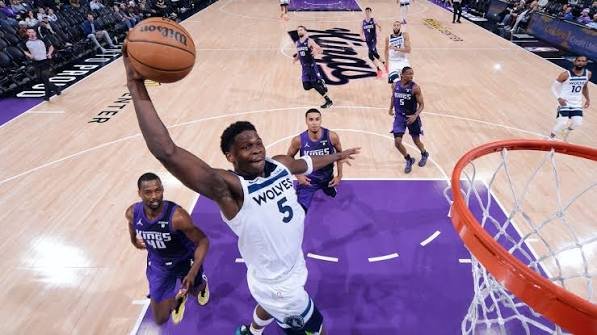
Top Scorers From Both Teams
| Player | Team | Points |
|---|---|---|
| Anthony Edwards | Timberwolves | 26 |
| Zach LaVine | Kings | 26 |
| DeMar DeRozan | Kings | 22 |
| Jaden McDaniels | Timberwolves | 21 |
| Domantas Sabonis | Kings | 20 |
| Julius Randle | Timberwolves | 19 |
| Rudy Gobert | Timberwolves | 19 |
The most interesting part of this table is the balance. Anthony Edwards and Zach LaVine tied for the scoring lead, but Minnesota had more players close behind. That allowed the Timberwolves to keep attacking even when Edwards was not scoring on every possession.
Rebounds, Assists and Defensive Leaders
Domantas Sabonis and Rudy Gobert were central to the rebounding battle, with Sabonis finishing with 13 rebounds and Gobert collecting 12. Edwards also added five assists, helping Minnesota create offense without relying entirely on individual isolation plays.
Interesting fact: Sacramento finished with more total rebounds than Minnesota, yet the Kings still lost by 27 points. This is a useful reminder that winning one statistical category does not guarantee victory. Shooting efficiency, turnovers and the ability to consistently score across several possessions can have a much larger effect on the final result.
Which Players Had the Best Plus/Minus?
Plus/minus measures the team’s scoring margin while a player is on the court. It can help show whether a player was part of successful lineups, but it should not be treated as a complete measure of individual quality because teammates and opponents also influence the number.
In this matchup, Minnesota’s large team advantage naturally produced strong plus/minus results for many of its players. The more useful way to interpret that number is alongside scoring, shooting, assists, rebounds and defensive contributions rather than using it alone to decide who played best.
What the Player Stats Tell Us About the Game
The Sacramento Kings vs Timberwolves match player stats reveal that Minnesota won through a combination of efficient shooting, balanced scoring and better ball security. The Timberwolves shot 53.6% from the field and made 18 three-pointers, while Sacramento shot 44.4% overall despite making a higher percentage of its three-point attempts.
The game also shows how quickly an NBA matchup can change. Sacramento was only six points behind after the opening quarter, but Minnesota scored 40 points in both the second and third quarters. The Timberwolves entered the fourth quarter ahead 111–84, meaning the game was effectively decided before the final period.
Why Minnesota Timberwolves Won
Minnesota’s victory came from several connected strengths. The team shot efficiently, moved the ball, limited turnovers and received meaningful scoring from multiple players. Anthony Edwards led the team, but he did not have to carry the entire offensive load.
Another major factor was the third quarter. Minnesota scored 40 points in the period and stretched its advantage to 27 points entering the fourth. That kind of sustained offensive pressure made a Sacramento comeback extremely difficult.
Why Sacramento Kings Lost
Sacramento struggled mainly because it could not match Minnesota’s efficiency. The Kings scored 117 points, but they needed many more possessions to reach that total because they shot a lower percentage and committed more turnovers.
The 16 turnovers were particularly costly. Minnesota committed only 10, giving the Timberwolves a six-turnover advantage. When combined with Minnesota’s 53.6% field-goal shooting, those extra possessions helped explain why the final margin became so large.
Most Important Statistical Takeaways
The key numbers from this Kings vs Timberwolves box score can be summarized simply:
- 144–117: Minnesota’s final victory.
- 26 points: Anthony Edwards’ team-high.
- 26 points: Zach LaVine’s Sacramento-leading score.
- 20 points, 13 rebounds: Domantas Sabonis’ double-double.
- 19 points, 12 rebounds: Rudy Gobert’s double-double.
- 53.6%: Minnesota’s field-goal percentage.
- 18: Minnesota’s made three-pointers.
- 16 turnovers: Sacramento’s total.
- 40 points: Minnesota scored in both the second and third quarters.
One especially useful fact for readers is that Sacramento did not lose because it could not score. The Kings scored 117 points, which is a high offensive total in many NBA games. They lost because Minnesota scored at an exceptional rate and combined that offense with better efficiency and fewer turnovers.
Who was the leading scorer in the Kings vs Timberwolves game?
Anthony Edwards led the Minnesota Timberwolves with 26 points in the November 9, 2025 matchup against Sacramento. Zach LaVine also scored 26 points for the Kings, meaning the two leading scorers finished with exactly the same total. Edwards also contributed four rebounds, five assists and two steals, so his impact went beyond scoring. LaVine was Sacramento’s leading offensive player, but Minnesota received more balanced scoring from its supporting players. Jaden McDaniels scored 21, while Julius Randle and Rudy Gobert each scored 19. That balance helped Minnesota win 144–117.
What was the final score between the Sacramento Kings and Timberwolves?
The Minnesota Timberwolves defeated the Sacramento Kings 144–117 on November 9, 2025, at Golden 1 Center in Sacramento. Minnesota led 31–25 after the first quarter and increased its advantage to 71–54 by halftime. The biggest scoring difference came in the third quarter, when the Timberwolves produced 40 points and extended their lead to 111–84. Sacramento matched Minnesota with 33 points in the fourth quarter, but the game had already been decided. The 27-point final margin reflected Minnesota’s superior shooting efficiency, balanced scoring and lower turnover total.
How many points did Anthony Edwards score?
Anthony Edwards scored 26 points against the Sacramento Kings. He also recorded four rebounds, five assists and two steals, making him an important contributor in several areas of the box score. Edwards played a key role during Minnesota’s second-quarter scoring run, including a three-pointer and a four-point play that helped the Timberwolves create separation. Although 26 points was not an enormous individual total by Edwards’ standards, it was enough because Minnesota had several other players producing consistently. His five assists were also valuable because they helped create opportunities for teammates rather than forcing him to score on every possession.
How many points did Zach LaVine score?
Zach LaVine scored 26 points, making him Sacramento’s leading scorer and tying Anthony Edwards for the highest individual scoring total in the game. LaVine provided important offense throughout the matchup, especially when the Kings were trying to respond to Minnesota’s scoring runs. However, his 26 points could not prevent Sacramento from falling behind because Minnesota received strong contributions from several players. DeMar DeRozan scored 22 points and Domantas Sabonis added 20 points and 13 rebounds, but the Kings struggled to match Minnesota’s shooting efficiency. The result shows why individual scoring numbers need to be viewed alongside team statistics.
Did Domantas Sabonis record a double-double?
Yes. Domantas Sabonis recorded a double-double with 20 points and 13 rebounds for Sacramento. His rebounding performance was particularly important because Minnesota had Rudy Gobert protecting the paint and collecting 12 rebounds. Sabonis remained productive despite the difficult matchup and gave Sacramento a strong interior presence. The Kings also finished with 53 total rebounds, slightly more than Minnesota’s 51, which shows that Sacramento did compete successfully in that area. However, rebounding was not enough to overcome the difference in shooting and turnovers. Sabonis’ performance remains one of the strongest individual positives for Sacramento from this matchup.
Final Takeaways From the Kings vs Timberwolves Match Player Stats
The Sacramento Kings vs Timberwolves match player stats tell a much clearer story than the final score alone. Both teams had players capable of producing big numbers, with Edwards and LaVine each scoring 26 points. Sabonis recorded a double-double, while Gobert also produced a double-double for Minnesota.
The difference was the overall team performance. Minnesota shot 53.6% from the field, made 18 three-pointers and committed only 10 turnovers. Sacramento shot 44.4% and turned the ball over 16 times. Those numbers, combined with Minnesota’s 40-point second and third quarters, explain how the Timberwolves turned a six-point first-quarter lead into a 144–117 victory.
Final fact: Sacramento actually finished with more rebounds than Minnesota, yet lost by 27 points. That makes this matchup a useful example of why NBA player statistics should always be studied together rather than focusing on one number.
If you are analyzing the Kings vs Timberwolves box score, the biggest lesson is simple: balanced scoring + efficient shooting + fewer turnovers can matter more than having the best individual scoring performance.
Read more :Washington Nationals vs New York Yankees Match Player Stats: Full Breakdown